ERPNext Manufacturing: from BOM to finished goods cost
ERPNext Manufacturing plans and records production in the same system as stock and accounts. Multi-level BOMs and routings drive production plans, work orders and job cards; material issued and goods produced are valued into stock as they happen. It suits discrete, batch and make-to-order production, with subcontracting built in.
- 1
- 2
- 3
- 4
- 5
- 6
Sales Order. Confirms what the customer ordered, with quantities and delivery dates.
Production Plan. Explodes BOMs for open sales orders or material requests and works out sub-assemblies and raw material shortfalls.
Work Order. Authorizes production of one item against its BOM and transfers material to work in progress.
Job Card. Records time, quantity and workstation for each operation on the shop floor.
Quality Inspection. Captures readings against a template and accepts or rejects the batch.
Stock Entry (Manufacture). Consumes raw materials and receives finished goods at their actual cost.
At a glance
- Owned by
- Plant head or production manager
- Runs in
- ERPNext, standard module
- Works with
- Inventory, Buying, Accounting, CRM, Asset Management, Projects
- Packages
- Core + Manufacturing Starter Pack: ₹1,40,000, 70 hours, 60 days. GST extra; Frappe Cloud billed separately.
What changes for your production team
We map how your team works today before configuring anything. These are the changes department heads notice first.
Key capabilities
- Multi-level BOMs
- Sub-assemblies, scrap, process loss and alternative items, with a default BOM per item and earlier versions kept.
- Routing and workstations
- Operations in sequence, each on a workstation with hour rates for power, consumables, rent and wages.
- Production planning (MRP)
- Consolidate open sales orders or material requests, explode BOMs, and create work orders and material requests in one pass.
- Job cards and capacity
- Shop-floor capture per operation, with optional capacity planning against workstation working hours.
- Subcontracting
- Send raw materials to a job worker and receive finished goods with the right stock and cost.
- Quality inspection
- Incoming, in-process and final inspection templates, with rejected quantity recorded.
When the standard module does not cover one of your processes, we build the gap in a separate Frappe app, so ERPNext itself stays upgradeable. How we handle customization
See Manufacturing in ERPNext
Screens for your production team, from Frappe’s official ERPNext documentation. Select one to see it.
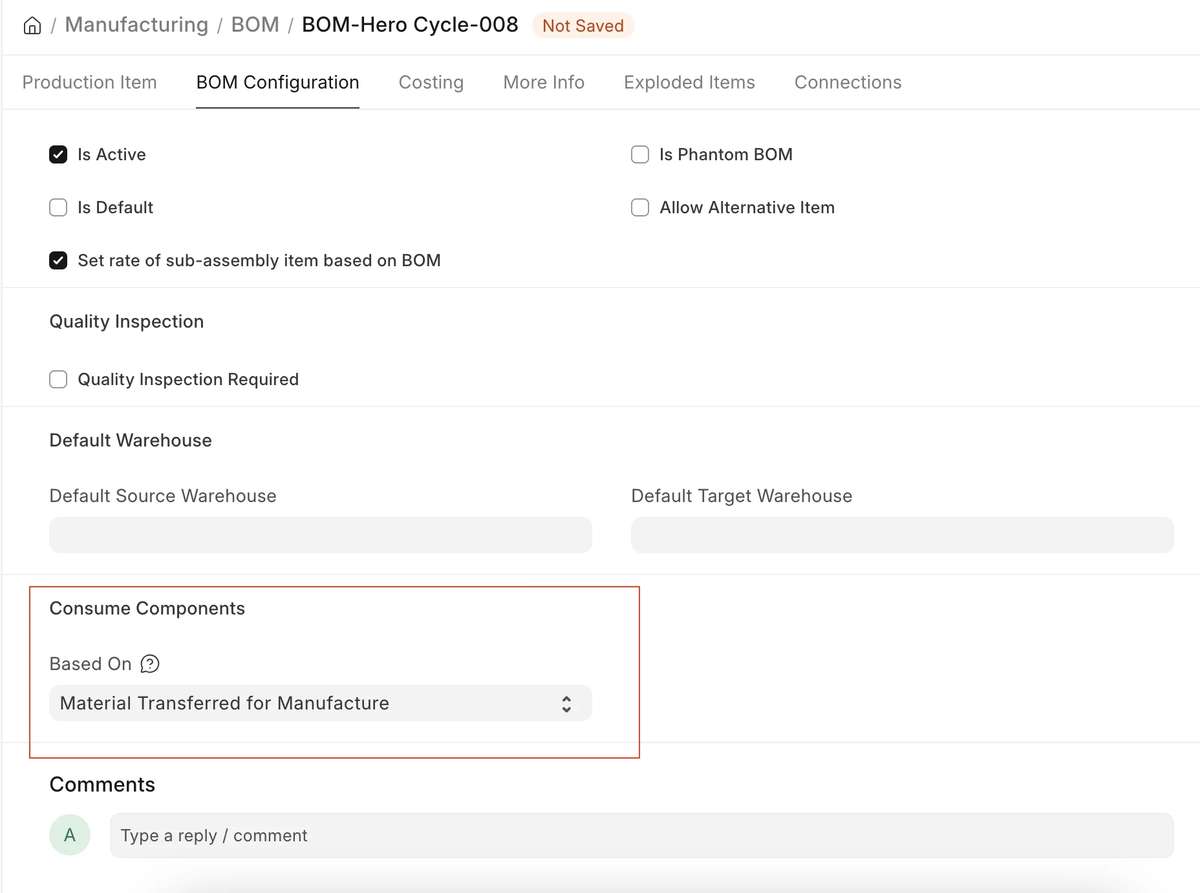
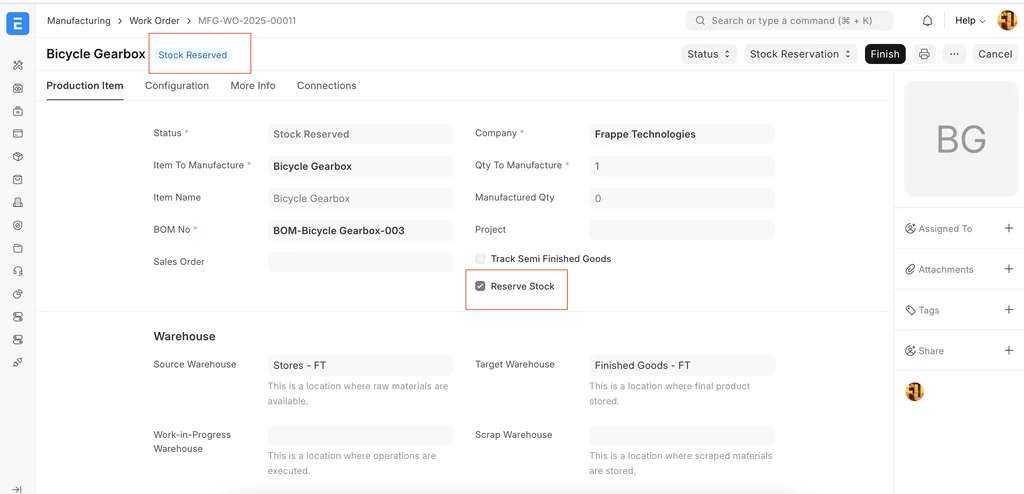
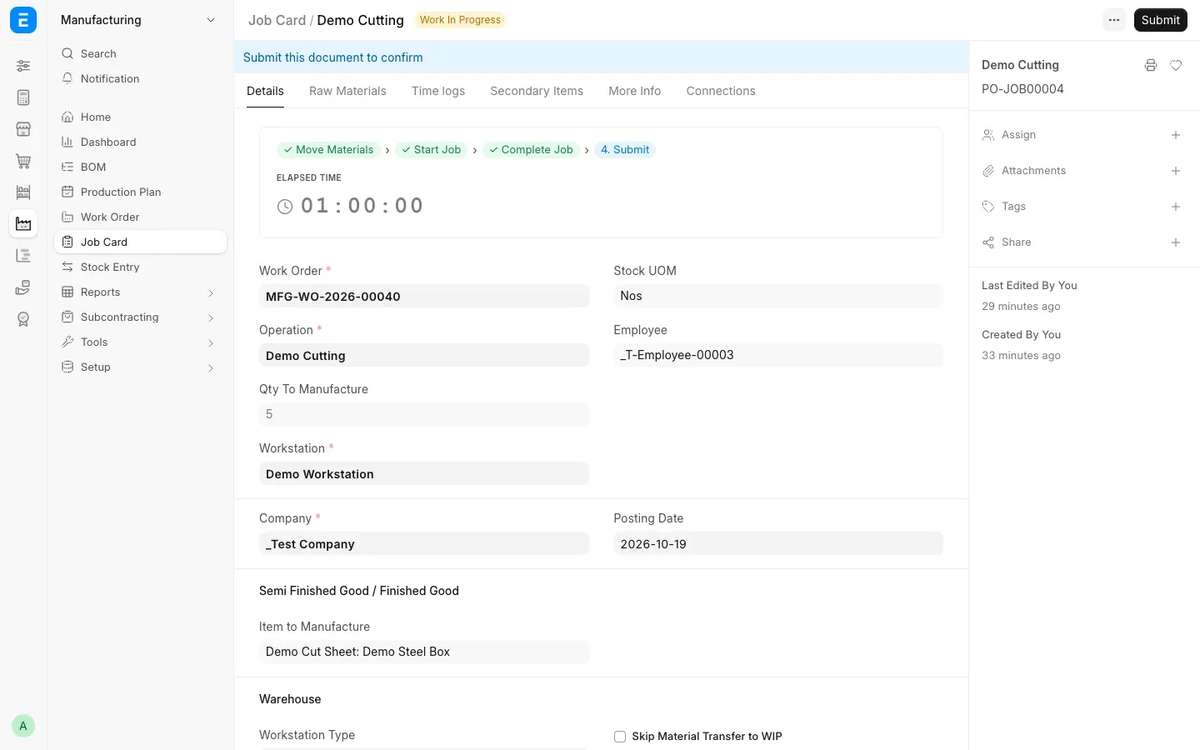
Walkthroughs from Frappe
Manufacturing in ERPNext & v16 features | Mihir Kandoi | Frappe Local Jaipur 2025
Frappe · 16:50 · ERPNext v16
Watch on YouTube
Official videos from Frappe’s YouTube channel. Nothing loads from YouTube until you press play.
Reports the plant head gets as standard
These come with ERPNext. Each one can be filtered by company, period or dimension, printed, and exported to Excel.
- Production Planning ReportRaw material availability for planned work orders.
- Work Order SummaryOpen, delayed and completed work orders by age.
- Job Card SummaryOperation progress and time by workstation.
- Downtime AnalysisLost time by workstation and reason.
- BOM ExplorerThe full multi-level structure of any item.
- BOM Variance ReportPlanned against actual material and cost by work order.
- Cost of Poor Quality ReportTime and cost spent on corrective operations.
- Production AnalyticsWork order volumes by status over time.
How Manufacturing connects to the rest of ERPNext
Every module writes to the same database. Nothing is exported, re-keyed or synced overnight between them.
- InventoryRaw materials move to work in progress, and finished goods into stock, through stock entries.
- BuyingShortages from the production plan become material requests and purchase orders.
- AccountingConsumption, WIP and finished goods values post to the ledger.
- CRMConfirmed sales orders feed the production plan or create work orders directly.
- Asset ManagementMachines registered as assets get maintenance schedules alongside their workstations.
- ProjectsMake-to-order production can be costed against a project.
Manufacturers running ERPNext with Midocean


“With ERPNext, we now have a centralized system that has streamlined operations, reduced dependency on manual files, improved reporting accuracy, enhanced team collaboration, and given management better control over planning, costing, quality, and overall business performance.”
Shimnit India went live in 2024 after six months, replacing Epicor, with 200+ users and custom production and job card modules built alongside standard ERPNext. PFive Bags went live in 2025 in four months, with production planning moved off Google Sheets and quality checks off Excel. See the case studies
Manufacturing questions
Does ERPNext handle batch and process manufacturing?
Yes. Batch-tracked items and BOMs with scrap and process loss are standard. Formula-style recipes are set up as BOMs with quantities per batch.
Can ERPNext do capacity planning?
Yes, at operation level. When a work order is released, ERPNext schedules its job cards into free workstation time within a planning window you set. Constraints such as tooling or operator skills need custom work, which we scope before you rely on it.
How is the cost of a finished item calculated?
Raw material at valuation rate, plus operating cost from workstation hour rates and job card time, plus any additional costs added on the stock entry. Scrap is credited back at its own valuation.
Can we run subcontracting or job work?
Yes. Subcontracting orders send raw materials to the vendor and subcontracting receipts bring back finished goods, with stock at the vendor tracked throughout.
Can shop-floor teams use barcodes or tablets?
Yes. Job cards and stock entries accept barcode scans and work in a tablet browser. BrassERP, our mobile app for ERPNext manufacturing, adds work orders, job work and QR scanning on phones.
Plan your manufacturing rollout
A senior consultant walks through how your production team works today and recommends a scope for Manufacturing, in writing.