ERPNext Asset Management: register, depreciate and maintain fixed assets
ERPNext Asset Management keeps a register of every fixed asset with its location, custodian and value, and posts depreciation to the ledger on schedule. Maintenance, repairs and movements are recorded against the asset, so finance and maintenance work from the same record, from purchase to disposal.
- 1
- 2
- 3
- 4
- 5
- 6
Purchase Receipt. Receives the asset item, and ERPNext can create the asset record from it.
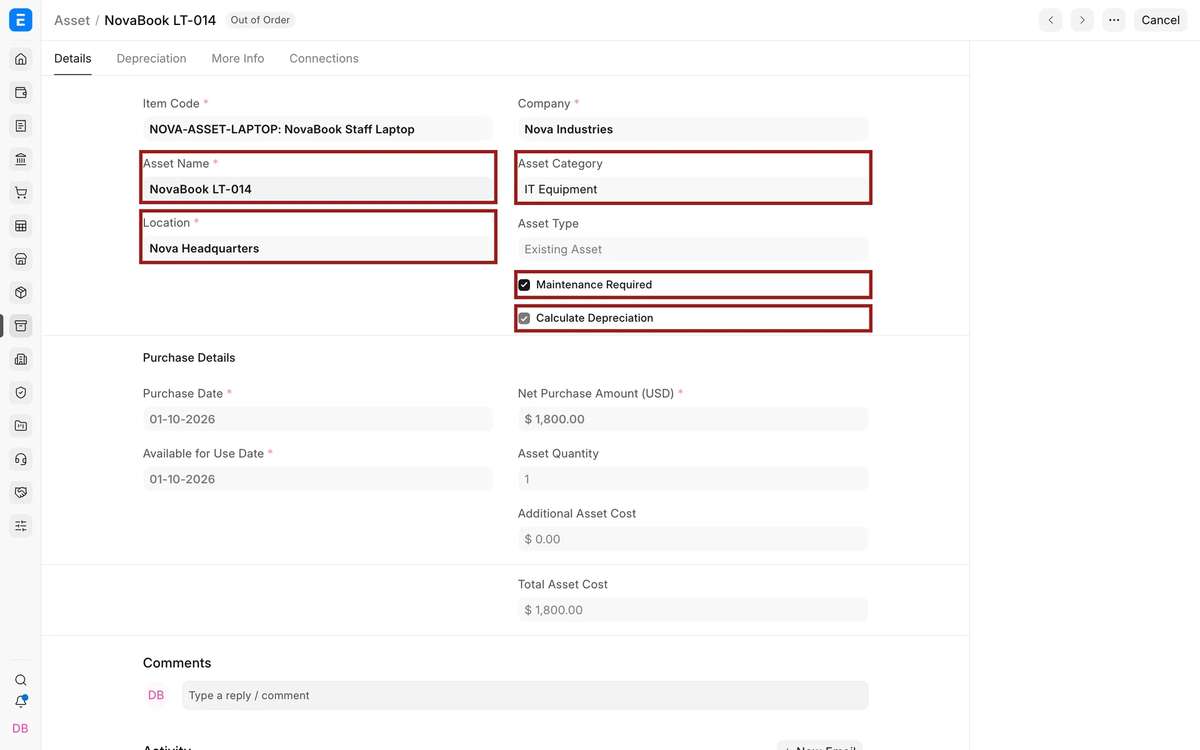
Asset. Holds category, location, custodian, cost and depreciation settings.
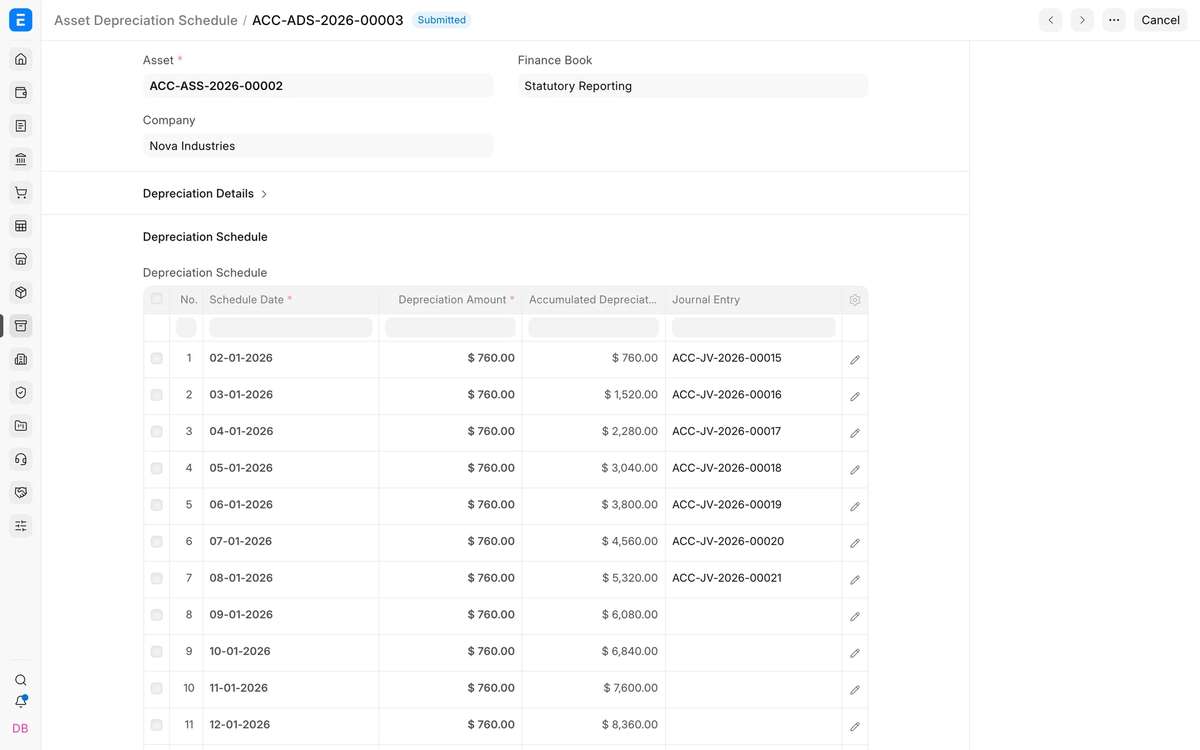
Asset Depreciation Schedule. Calculates each period’s depreciation by straight line, written down value or double declining balance.
Asset Movement. Records transfers between locations or custodians.
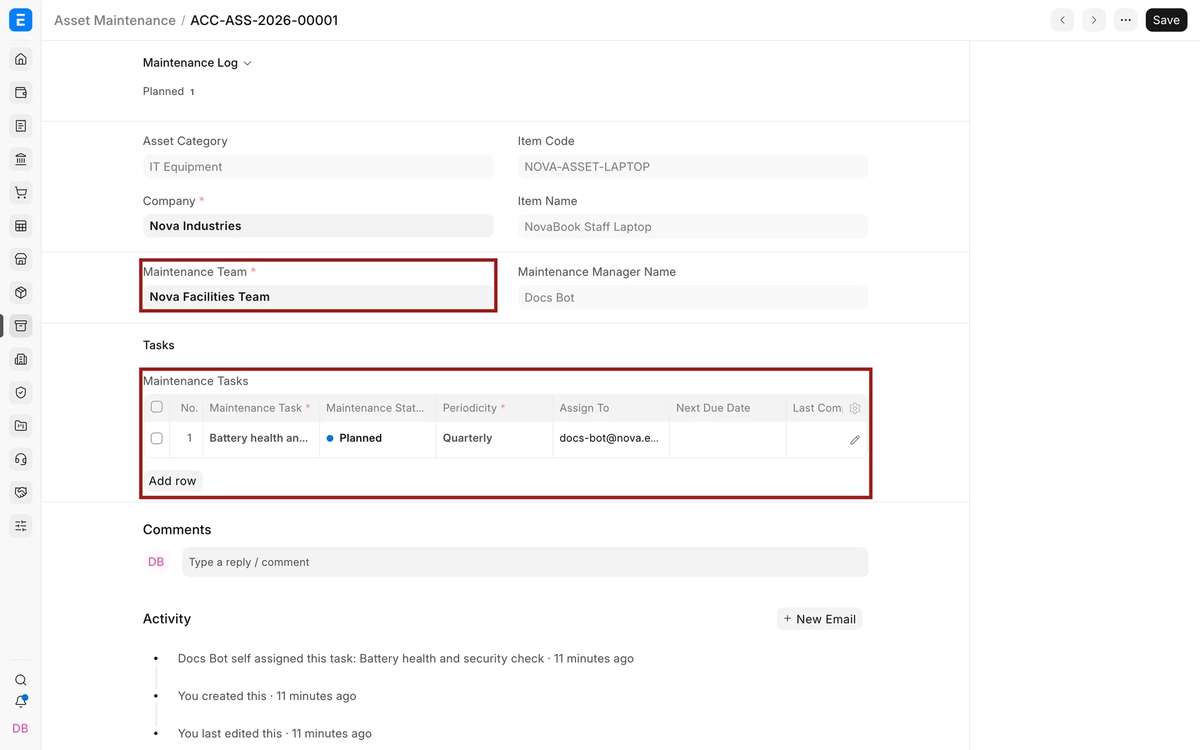
Asset Maintenance. Sets recurring maintenance tasks for a maintenance team and logs the work done.
Sales Invoice. Sells the asset, or it is scrapped, booking the gain or loss and closing it in the register.
At a glance
- Owned by
- Finance controller and maintenance head
- Runs in
- ERPNext, standard module
- Works with
- Accounting, Buying, Inventory, Manufacturing, Projects
- Packages
- Not a Starter Pack tier. Scoped within an ERPNext implementation, or the Success Pack (₹8,50,000 including 200 development hours).
What changes for your finance and maintenance teams
We map how your team works today before configuring anything. These are the changes department heads notice first.
Key capabilities
- Asset register
- Category, location, custodian, purchase details and insurance on each asset.
- Depreciation methods
- Straight line, written down value, double declining balance or manual, with shift-based depreciation where needed.
- Finance books
- Separate depreciation for company books and tax books on the same asset.
- Capital work in progress
- Collect construction or installation cost, then capitalize it as an asset.
- Maintenance and repair
- Maintenance teams, schedules and logs; repairs with spares and costs, capitalized where they add value.
- Value adjustment and disposal
- Revalue, sell or scrap an asset, with the gain or loss booked.
When the standard module does not cover one of your processes, we build the gap in a separate Frappe app, so ERPNext itself stays upgradeable. How we handle customization
See Asset Management in ERPNext
Screens for your finance and maintenance teams, from Frappe’s official ERPNext documentation. Select one to see it.
Reports finance and maintenance get as standard
These come with ERPNext. Each one can be filtered by company, period or dimension, printed, and exported to Excel.
- Fixed Asset RegisterEvery asset with cost, depreciation and net value.
- Asset Depreciation LedgerDepreciation entries by asset and period.
- Asset Depreciations and BalancesOpening, additions, depreciation and closing by category.
- Asset MaintenanceMaintenance tasks due and done.
- Asset ActivityThe history of every action on each asset.
How Asset Management connects to the rest of ERPNext
Every module writes to the same database. Nothing is exported, re-keyed or synced overnight between them.
- AccountingDepreciation, revaluation and disposal post journal entries.
- BuyingAssets are bought through purchase orders and receipts.
- InventorySpares used in repairs are issued from stock.
- ManufacturingMachines tracked as assets keep maintenance history next to their workstations.
- ProjectsCapital projects collect cost before it is capitalized.
Industries where Asset Management does the most work
- MiningExcavators, loaders, crushers and trucks on preventive maintenance.
- Oil and gasCritical equipment with maintenance plans and calibration.
- ManufacturingMachine maintenance schedules, breakdown logs and spares.
- AutomotiveMoulds, dies and fixtures with cycle counts and maintenance.
- ConstructionCranes and heavy machinery on maintenance schedules.
Where our experience comes from
We have not published an asset management case study yet. Our published ERPNext work, including the 200+ user rollout for Shimnit India, is in our case studies.
Read the Shimnit India case studyAsset Management questions
Can we import existing assets?
Yes. Existing assets come in with purchase date, gross value and accumulated depreciation, and depreciation continues from there.
Which depreciation methods are supported?
Straight line, written down value, double declining balance and manual schedules, set per asset category or per asset.
Can we keep separate book and tax depreciation?
Yes. Finance books let one asset carry different depreciation for your company books and tax books.
Does it handle preventive maintenance?
Yes. Maintenance tasks are set with a frequency and a team, fall due on schedule, and each visit is logged against the asset.
Plan your asset management rollout
A senior consultant walks through how your finance and maintenance teams works today and recommends a scope for Asset Management, in writing.