ERPNext Accounting: every transaction in one ledger
ERPNext Accounting is a double-entry ledger that every other module writes to. Sales and purchase invoices, payments, stock movements, payroll and depreciation post to the general ledger when they are submitted, so finance closes the month from the same data operations used. It handles multi-company, multi-currency, budgets and accounting dimensions.
GST returns, e-invoicing and e-way bills for India run through the India Compliance app, installed alongside ERPNext.
- 1
- 2
- 3
- 4
- 5
Sales Invoice. Raised from a sales order or delivery, with tax calculated from the item and tax template.
Payment Entry. Records money received or paid and allocates it against open invoices.
Bank Reconciliation Tool. Matches imported bank statement lines with payment entries and journal entries.
Journal Entry. Posts accruals, provisions and corrections, each with its own audit trail.
Period Closing Voucher. Transfers the year’s profit or loss to the closing account you choose, usually retained earnings.
At a glance
- Owned by
- Finance controller or CFO
- Runs in
- ERPNext, standard module
- Works with
- Inventory, Buying, CRM, Manufacturing, HR and Payroll, Asset Management, Projects
- Packages
- Included in the Core Starter Pack: ₹80,000, 40 hours, 30 days. GST extra; Frappe Cloud billed separately.
What changes for your finance team
We map how your team works today before configuring anything. These are the changes department heads notice first.
Key capabilities
- Accounting dimensions
- Tag transactions with territory, brand, project or any dimension you define, alongside cost centers, for profit and loss at that level.
- Bank reconciliation
- Import statements from CSV or Excel, or connect through Plaid where it covers your bank, then match lines to vouchers.
- Budgets and controls
- Monthly or annual budgets on cost centers and projects, with a warn or stop action when they are exceeded.
- Multi-currency
- Daily exchange rates, invoices in any currency, and exchange gain or loss posted on payment and revaluation.
- Multi-company
- Several companies on one site, each with its own books, and consolidated financial statements across them.
- Receivables follow-up
- Ageing reports, dunning letters and scheduled statements of account emailed to customers.
When the standard module does not cover one of your processes, we build the gap in a separate Frappe app, so ERPNext itself stays upgradeable. How we handle customization
See Accounting in ERPNext
Screens for your finance team, from Frappe’s official ERPNext documentation. Select one to see it.
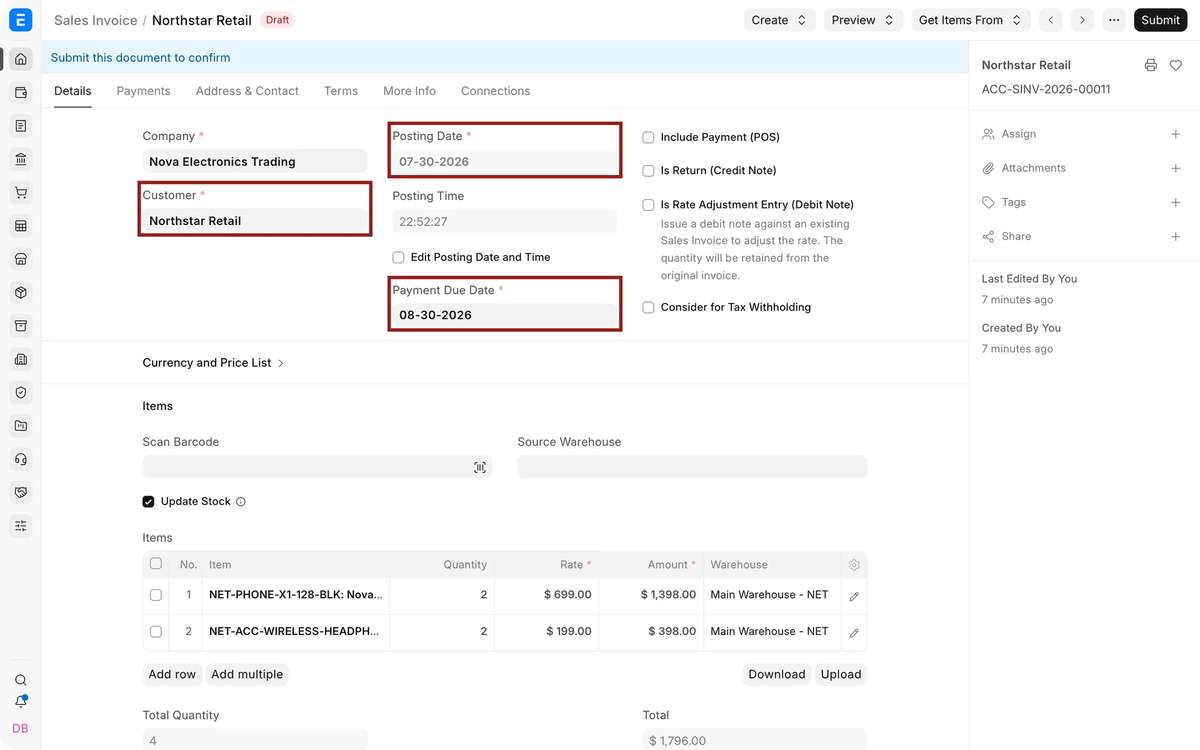
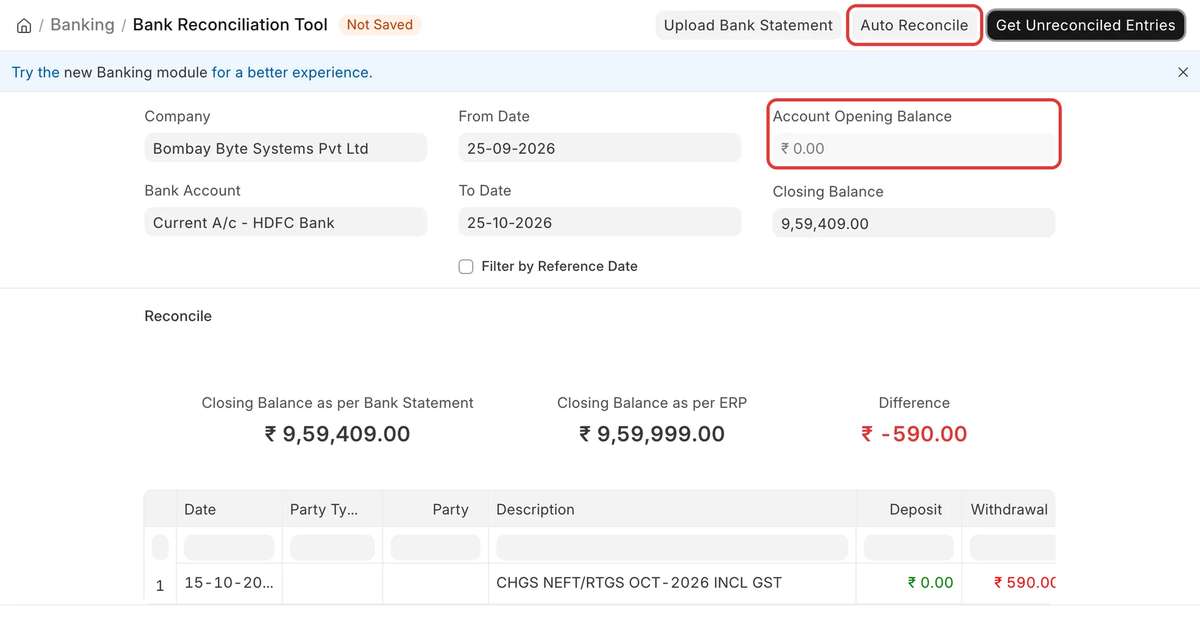
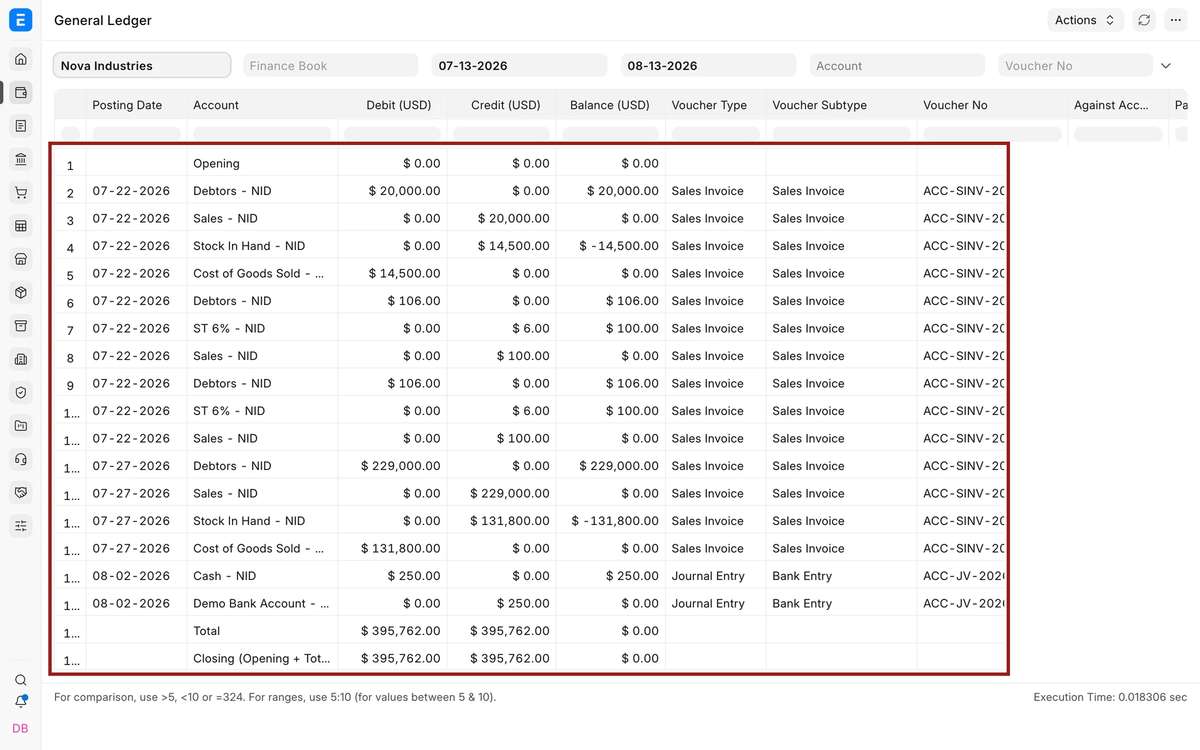
Walkthroughs from Frappe
Journal Entry & Ledger | Module 3: Fundamentals of Accounting (5 of 8) | Complete ERPNext Course
Frappe · 13:00 · ERPNext v16
Watch on YouTube
Official videos from Frappe’s YouTube channel. Nothing loads from YouTube until you press play.
Reports the finance team gets as standard
These come with ERPNext. Each one can be filtered by company, period or dimension, printed, and exported to Excel.
- General LedgerEvery posting, by account, party, voucher or dimension.
- Trial BalanceBalances by account for any period, before you close.
- Profit and Loss StatementIncome and expense by period, company, cost center or dimension.
- Balance SheetAssets, liabilities and equity at any date.
- Accounts ReceivableWhat each customer owes, aged by due date.
- Cash FlowOperating, investing and financing cash movement.
- Gross ProfitMargin by invoice, item, customer or territory.
- Budget Variance ReportBudget against actual by cost center or project.
How Accounting connects to the rest of ERPNext
Every module writes to the same database. Nothing is exported, re-keyed or synced overnight between them.
- InventoryWith perpetual inventory, each stock movement posts its value to the stock and cost accounts.
- BuyingPurchase invoices create payables and update supplier balances.
- CRMQuotations become sales orders and invoices that create receivables.
- ManufacturingMaterial consumed and goods produced are valued into work-in-progress and stock accounts.
- HR and PayrollPayroll entries post salary accruals and payments; expense claims post reimbursements.
- Asset ManagementDepreciation, revaluation and disposal post as journal entries.
- ProjectsCosts and invoices tagged to a project give project profit and loss.
Industries where Accounting does the most work
- ManufacturingWIP valuation, production variance and GST-ready invoicing.
- Trading and distributionOutstanding reports, credit limits and payment follow-up.
- E-commerceGateway and marketplace settlements matched to orders and bank entries.
- ConstructionProject-wise profit and loss, retention and budget variance.
- HealthcareConsultation and package billing, claims and receivables.
- EducationFee invoices, receipts and concessions.
Finance on ERPNext with Midocean


PFive Bags moved its accounts from Tally into ERPNext, alongside sales, purchase, production and quality. The client reports audit preparation about 60% faster and manual reporting effort down 50–70%. See the case studies
Accounting questions
Can ERPNext replace Tally or QuickBooks?
For most growing companies, yes. ERPNext covers the ledger, receivables, payables, banking, tax and financial statements, and adds stock, purchasing and sales in the same database. We bring across opening balances and open invoices; full history migration is scoped separately.
Does it support GST e-invoicing and e-way bills?
Yes, through the India Compliance app, which runs alongside ERPNext. It generates e-invoices and e-way bills and prepares GSTR-1 and GSTR-3B data.
Can we manage several companies?
Yes. Each company keeps its own chart of accounts and books, and the consolidated financial statement report combines them.
Can posted entries be edited?
No. Submitted entries are locked, so a correction means cancelling and amending, and both versions stay in the audit trail. Accounting periods can also be closed to stop back-dated postings.
Which stock valuation methods are supported?
FIFO, moving average and LIFO. You set a default and can override it per item, and stock value posts to the ledger as goods move.
Plan your finance rollout
A senior consultant walks through how your finance team works today and recommends a scope for Accounting, in writing.